Overview and Learning Objectives
Learning Objective
Develop and demonstrate model literacy: be able to fit, evaluate, and describe a variety of statistical models
- Fit: consider frequentist and Bayesian approaches in R/JAGS
- Evaluate: understand assumptions and how to evaluate them
- Describe models using equations and text
- Interpret model parameters and link estimates of parameters in computer output to model equations
Will consider models for:
- Normal (i.e., Gaussian) data that are independent and have constant variance (linear regression)
- Non-linear predictor-response relationships
- Data with non-constant variance (generalized least squares)
- Count and binary data (generalized linear models)
- Correlated data (mixed models, generalized estimating equations, cluster-level bootstrap).
Learning Objective
Be able to choose an appropriate method depending on characteristics of the data.
Learning Objective
Gain an appreciation for challenges associated with selecting among competing models and performing multi-model inference.
- We will briefly cover some popular model-building strategies
- We will consider directed acyclical graphs and their implications for choosing appropriate models
Learning Objective
Conduct research using a workflow that maximizes ‘reproducibility’ of your work.
- Projects in Rstudio
- rmarkdown/quarto, knitr
- Project/file management
Homework and in-class assignments will give you experience with tools in R/Rstudio for reproducible research
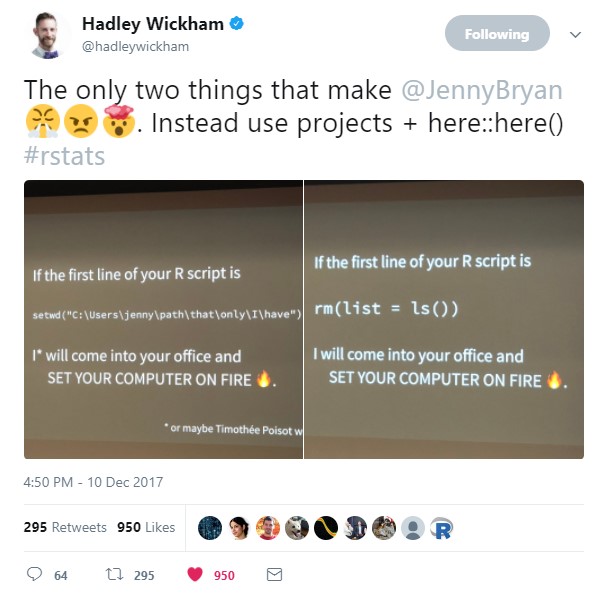
Homework Assignments
I use a combination of self- and peer-evaluations:
- helps me spend my time efficiently
- provides an opportunity to teach, and learn from, your peers
To make this work, it is important that you turn in assignments on time, so please plan ahead if you will be away or have a busy stretch.
Mental Health
Is so important (and challenging these days).
Communicate with me as early as possible if you are struggling to focus, keep up, understand the material, or meet expected deadlines.
Assessments
- Complete exercises in the Stats4EcologistsByEcologists book.
- Submit your answers in the form of a reproducible (pdf, or word) document created using R/Rstudio.
- Self assessment: view the answer key and then note: a) any areas where your understanding was lacking prior to viewing the answer key; and b) whether or not any aspects of the problem (or solution) remain unclear after having viewed the answer key.
- Peer assessment: review your peer’s solution for completeness and accuracy and provide comments to help the student improve their understanding. If your peer clearly understood and fully completed the original assignment, please note this in your peer review.
- Read over your comments on your assignment provided by your peer (and by me).
Grading of Homework assignments
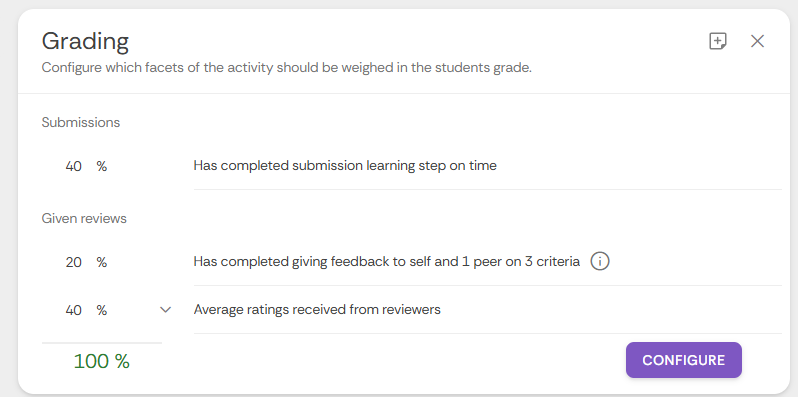
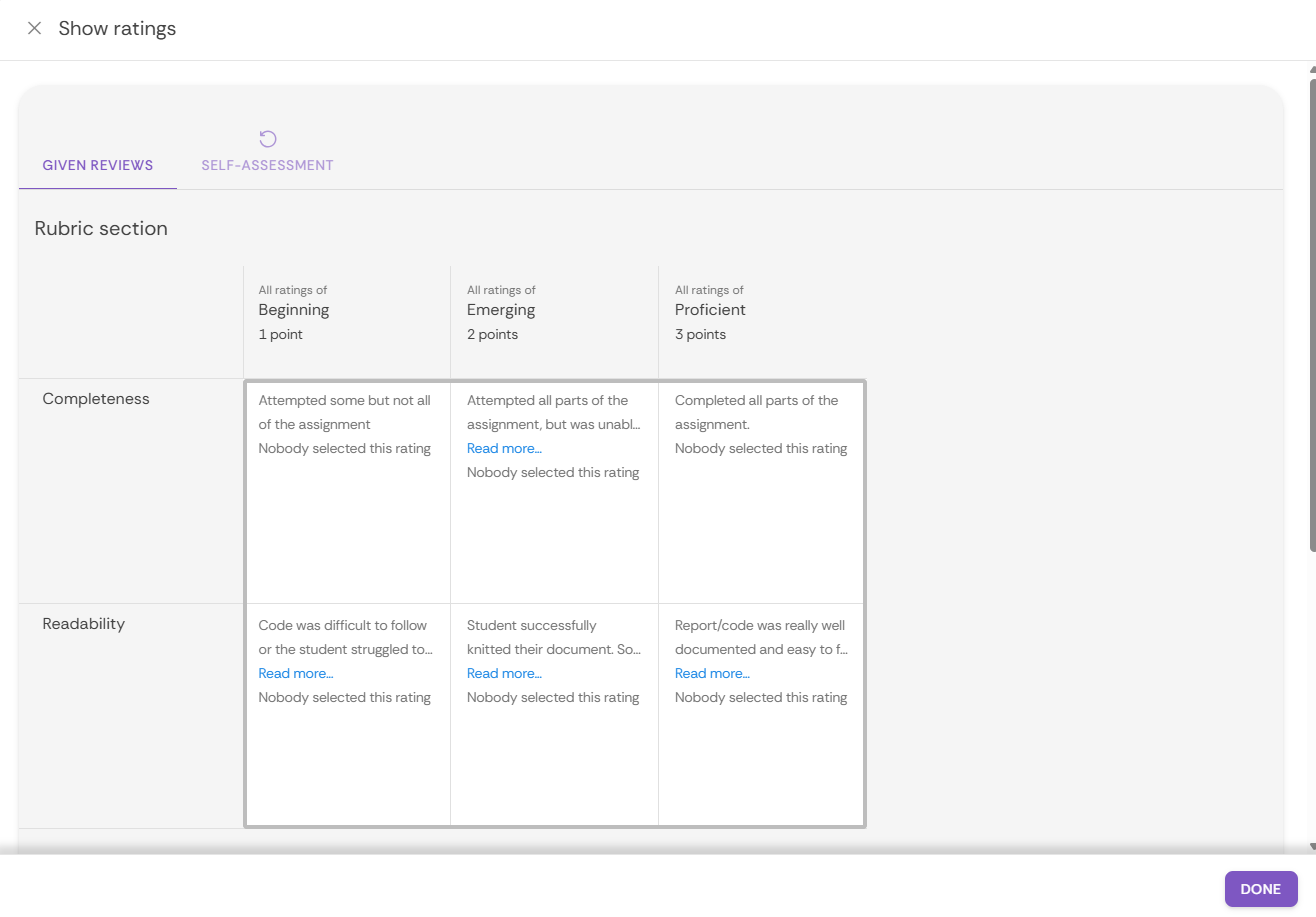
And, an overall rating on a 1-5 scale. I will adjust final scores!
Peer Assessment
Comments from previous year’s course evaluations
I like the self and peer assessments. It helps to be forced to review answers and process, otherwise I would just move to the next 10 things I have to work on.
Homework grading format is awesome: by evaluating ourselves and our peer before instructor sees our work, we are able to better understand mistakes that we made and /or others made and subsequently offer suggestions in a “learning by teaching” fashion.
I found the peer assessments to be highly valuable. The code we were exposed to throughout the course plus looking at more variations within the peer assessments has brought my level of understanding up significantly.
Grading
Homework assignments (45%), includes self and peer assessments
Quizzes (9) (15%)
Midterm exam (take home) (20%)
Final exam (in person) (20%)
S/N students will be required to complete all homework assignments and self and peer reviews, but will not have to take the exams or quizzes.
9 Grad Programs:
- Conservation Sciences (9)
- Plant and Microbial Biology (5)
- Natural Resources Science and Management (2)
- Water Resources (2) (+GIS)
- Ecology, Evolution, and Behavior (1)
- Applied Economics (1)
- Veterinary Population Medicine (1)
- Integrated BioSciences (1, remote)
Characteristics:
- Methodical (2)
- Determined (2)
- Task Oriented (2)
- Disciplined
- Detail oriented
- Hard working
- Meticulous
- Efficient (2)
- Practical (2)
- Resourceful
- Jack-of-all-trades (2)
- Caring (2)
- Conscientious
- Positive
Treat this class as a sport, where we are all on the same team!